
10 Proven SEO Strategies to Rank Higher on Google in 2026

Want more traffic, more leads and more sales without paying for every single click? Search engine optimization is still the highest-ROI digital marketing channel in 2026 — but the rules have changed. AI-generated answers, stricter core updates and zero-click searches mean the old tricks no longer work.
In this guide, you will learn 10 proven SEO strategies that professional agencies use to rank websites higher on Google. Each one is practical, tested and safe — no black-hat shortcuts that get your site penalized. Whether you run a local business or an online store, you can start applying these today.
Why SEO Still Matters in 2026
Google processes over 8.5 billion searches per day, and organic results still capture the majority of clicks — even with AI Overviews appearing on many pages. Sites that rank in the top three positions receive more than half of all clicks for a given query. That means one well-ranked page can outperform an entire paid ad campaign over time.
Unlike paid ads, SEO compounds. A blog post you publish today can bring traffic for years. The businesses winning in 2026 are the ones treating SEO as a system, not a one-time task. Below is the exact system, step by step.
1. Target Keywords With Real Business Intent
Keyword research is the foundation of everything. Instead of chasing high-volume vanity terms, focus on keywords that signal buying intent:
- Transactional: "hire SEO expert in Lahore", "buy custom website"
- Commercial investigation: "best digital marketing agency", "SEO pricing Pakistan"
- Informational (top of funnel): "how to improve website speed"
Use Google Keyword Planner, Ahrefs or Ubersuggest to check search volume and difficulty. A keyword with 500 monthly searches and strong intent beats a 50,000-volume keyword that brings students and researchers.
2. Create Content That Deserves to Rank
Google's helpful content system rewards pages that genuinely satisfy searchers. Before writing, study the top 10 results for your keyword and ask: what can I add that they do not have? Better examples, fresher data, clearer structure, original screenshots or a free template all make your page the obvious choice to rank.
Aim for comprehensive coverage: answer the main question in the first 100 words, then expand with sub-topics, FAQs and related terms. This is called semantic SEO — covering a topic fully instead of repeating one phrase.
3. Master On-Page SEO Basics
Every page should follow a consistent on-page checklist:
- Title tag: primary keyword near the front, under 60 characters, compelling.
- Meta description: 150–160 characters with a clear benefit and call to action.
- URL: short, clean and keyword-inclusive.
- Headings: one H1, logical H2/H3 structure with related keywords.
- Internal links: link to 3–5 related pages on your site using descriptive anchor text.
4. Build Topical Authority With Content Clusters
Instead of publishing random posts, organize content into topic clusters: one comprehensive pillar page (like this one) supported by 8–15 focused cluster articles, all interlinked. This tells Google your site is an authority on the subject, which lifts rankings for every page in the cluster.
5. Fix Technical SEO First
Even perfect content fails on a broken site. Run a technical audit covering:
| Factor | What to Check | Target |
|---|---|---|
| Site speed | Core Web Vitals (LCP, CLS, INP) | LCP under 2.5s |
| Mobile usability | Responsive design, tap targets | Pass mobile-friendly test |
| Crawlability | robots.txt, XML sitemap, index status | All key pages indexed |
| HTTPS | Valid SSL certificate | No mixed content |
| Broken links | 404 errors, redirect chains | Zero critical errors |
6. Earn Backlinks the Right Way
Backlinks remain one of Google's strongest ranking signals — but quality beats quantity. One link from a relevant, authoritative site is worth more than 100 directory links. Proven tactics include guest posting on niche blogs, creating linkable assets (free tools, original research, templates), digital PR and reclaiming unlinked brand mentions.
7. Optimize for AI Overviews and Featured Snippets
AI Overviews now appear on a large share of informational searches. Structure content so both Google and AI engines can extract it: concise direct answers under headings, FAQ sections, comparison tables and clear definitions. Winning the featured snippet often puts you at position zero — above the traditional number one result.
8. Refresh and Update Old Content
Updating an existing page is often faster and cheaper than writing a new one. Every quarter, review your top pages: refresh statistics, add new sections, improve internal links and re-publish. Many sites see rankings jump within weeks of a thorough content refresh.
9. Strengthen E-E-A-T Signals
Experience, Expertise, Authoritativeness and Trustworthiness (E-E-A-T) guide how Google evaluates quality. Show real experience with original photos and case studies, add detailed author bios, cite credible sources and make your contact information easy to find. For local businesses, consistent name, address and phone data across the web is essential.
10. Track the Right Metrics
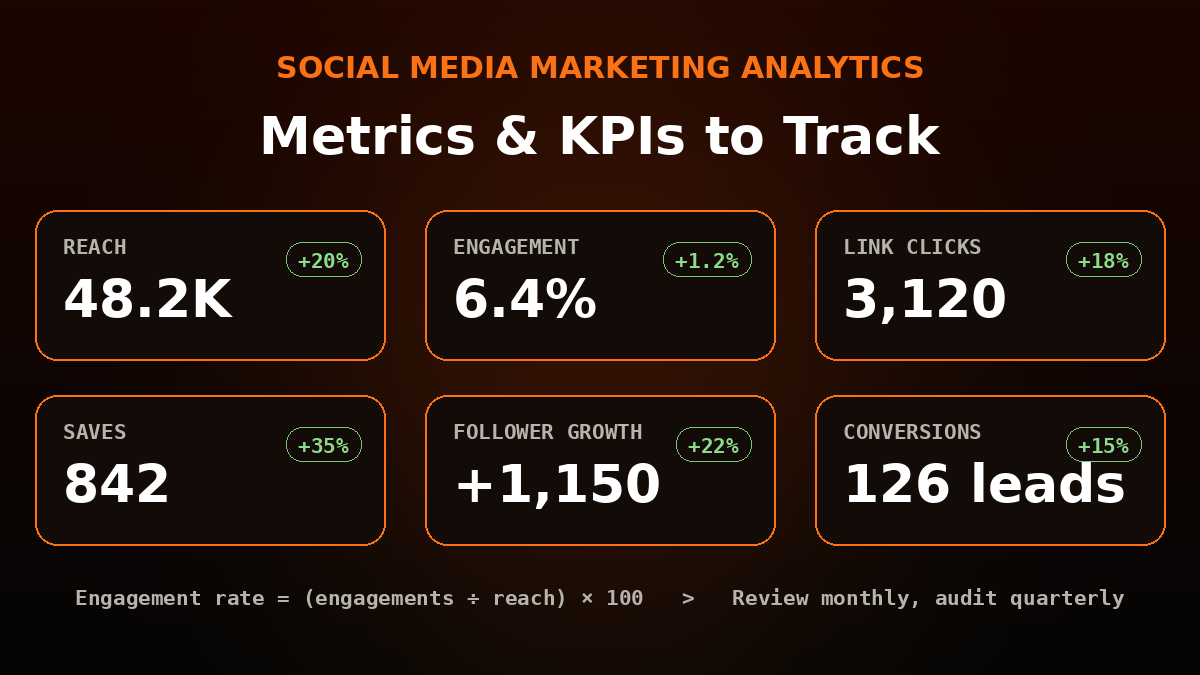
SEO without measurement is guesswork. Monitor these in Google Analytics and Search Console:
- Organic clicks and impressions — is visibility growing month over month?
- Average position — for your 20 most important keywords
- Click-through rate (CTR) — rewrite titles when CTR is below 3%
- Conversions from organic traffic — rankings that do not convert are vanity
- Indexed pages and crawl errors — catch technical problems early
Common SEO Mistakes to Avoid
- Keyword stuffing: write for humans first; search engines second.
- Buying cheap links: link farms can trigger manual penalties.
- Ignoring mobile: most searches now happen on phones.
- Chasing algorithms: optimize for users, and updates become tailwinds.
- Quitting too early: SEO typically takes 3–6 months to show real results.
Frequently Asked Questions About SEO
How long does SEO take to show results?
Most websites see meaningful movement in 3 to 6 months. New domains take longer; established sites with technical issues fixed can improve in weeks.
Is SEO better than paid ads?
They serve different goals. Ads deliver instant traffic that stops when you stop paying; SEO builds compounding traffic that lasts. The best strategy uses both.
Can I do SEO myself or do I need an agency?
Basic SEO — content, titles, internal links — is learnable. Technical audits, link building and competitive strategy usually benefit from experienced professionals.
Does AI content rank on Google?
Google does not penalize AI-assisted content, but it rewards helpful, original, experience-driven content. Pure generic AI text with no added value struggles to rank.
What is the most important SEO factor in 2026?
There is no single factor — but content quality aligned with search intent, strong technical foundations and authoritative backlinks together drive rankings.
Want Google Page 1 Without the Guesswork?
Our team has ranked businesses across Pakistan and worldwide using exactly these strategies. If you want a custom SEO roadmap, technical audit and monthly execution, MeetWithZaman is ready to help.
Get In Touch Explore Our Services