
Why Every Business Needs Digital Marketing in 2026
Digital-marketing-2026 is the ultimate strategy for modern entrepreneurs, because knowing why every business needs digital-marketing-2026 helps you understand that the way we conduct commerce has shifted dramatically toward a digital-first economy. If you’re still relying on traditional methods like billboards, flyers, or word-of-mouth alone, you’re missing out on the most powerful growth engine available today. As we navigate through 2026, the digital landscape has become much more than just an alternative channel—it is the core foundation of how brands survive, scale, and thrive in an aggressive market. Furthermore, exploring comprehensive industry resources like Search Engine Journal can help you stay ahead of fast-moving algorithmic updates. If you are a business owner or a professional looking to scale your enterprise, mastering digital-marketing-2026 is no longer optional—it is an absolute corporate necessity to ensure long-term profitability and sustainable commercial expansion in a crowded global marketplace. 1. Your Customers Are Already Online Through digital-marketing-2026 It’s a simple truth: before a modern consumer makes a purchase decision, they search. They check Google, scroll through social media feeds, watch product reviews on video platforms, and read online testimonials. If your business isn’t visible where your target audience spends their time, you are effectively invisible. Leveraging digital-marketing-2026 ensures that your brand appears at the exact moment a potential customer is actively looking for a solution, maximizing your conversion rates effortlessly. 2. AI-Powered Personalization and digital-marketing-2026 In 2026, customers don’t just want generic products; they demand hyper-personalized experiences tailored to their exact needs. With the rise of advanced artificial intelligence, businesses can now offer customized content, smart product recommendations, and automated customer service that feels human and helpful. Effective digital-marketing-2026 strategies allow you to leverage these tools to build deeper relationships at scale, turning casual visitors into dedicated brand loyalists. 3. Data-Driven Decisions with digital-marketing-2026 Remember the old frustration of wasting advertising budgets without tracking results? Modern digital-marketing-2026 eliminates that guesswork entirely. Every click, view, impression, and conversion generates actionable data. This allows you to track your Return on Investment (ROI) in real-time, refine your strategies based on empirical evidence, and optimize your financial budget for high-performing campaigns that yield maximum financial returns. 4. Leveling the Playing Field Using digital-marketing-2026 One of the most democratic aspects of digital-marketing-2026 is that it allows small local businesses to compete directly with massive industry giants. With precise targeting options—by location, interest, age, and browsing behavior—you don’t need an exorbitant corporate budget. A well-crafted, highly targeted digital campaign can outperform an expensive broadcast ad, highlighting why mastering digital-marketing-2026 is crucial. For internal reference, read our guide on Digital Business Strategy Optimization to enhance your execution. 5. Building Long-Term Trust Through digital-marketing-2026 Modern consumers value brand authenticity above everything else. Through effective digital-marketing-2026 practices like content marketing, social media engagement, and community building, you can show the human side of your business. By consistently providing value through helpful blogs and transparent communication, you build credibility and trust that turns casual buyers into loyal brand advocates who happily promote your services organically. The Bottom Line on digital-marketing-2026 In 2026, the digital divide is clear: there are businesses adapting quickly to the digital-first era and those being left behind. Embracing digital-marketing-2026 proves to be the fastest, most reliable way to grow your brand, connect with your audience, and secure your place in a competitive market while staying ahead of your primary competitors. Ready to Take the Next Step? Whether you’re looking to master these skills yourself to grow your own venture or want to start a professional career as an industry expert, the best time to start is today. At meetwithzaman.com, we provide the practical training and expert guidance you need to master digital-marketing-2026 and navigate this landscape with absolute confidence. Don’t just watch the digital revolution happen—lead it!
Grow Your Business Using Social Media
July 23, 2026 zamankhan45041@gmail.com Grow Your Business Using Social Media Social media has transformed the way businesses connect with their customers. With billions of active users across platforms like Facebook, Instagram, LinkedIn, TikTok, and X (formerly Twitter), social media is no longer just a place to share updates—it’s a powerful marketing channel that helps businesses build brand awareness, engage audiences, generate leads, and increase sales. Whether you’re a startup, a local business, or an established company, an effective social media strategy can help you reach your target audience and grow your business faster than ever before. In this guide, we’ll explore how social media marketing drives business growth and the best strategies to maximize your success. Why Social Media Matters for Business Growth Consumers spend hours each day on social media platforms, discovering new brands, researching products, and interacting with businesses. When you want to grow your business using social media, having an active presence allows you to meet potential customers where they already spend their time. Key benefits include: Increased brand visibility Higher customer engagement More website traffic Better lead generation Stronger customer relationships Increased sales opportunities Improved brand credibility Businesses that consistently invest in social media marketing and learn how to grow their business using social media often experience stronger customer loyalty and long-term success. 5 Ways Social Media Helps Grow Your Business 1. Increase Brand Awareness Social media introduces your business to new audiences every day. If you want to grow your business using social media, regularly sharing valuable content helps people recognize your brand, understand your services, and remember your business when they’re ready to make a purchase. Consistency is the key to building a recognizable online presence, and learning how to grow your business using social media ensures long-term brand recall. 2. Reach Your Target Audience Unlike traditional advertising, social media allows you to target specific audiences based on: Location Age Interests Occupation Online behavior Purchase intent This ensures your marketing budget is spent reaching people most likely to become customers. 3. Drive More Website Traffic Every social media post is an opportunity to direct potential customers to your website. Share: Blog articles Service pages Portfolio projects Product launches Special offers Customer success stories Quality traffic from social media can increase inquiries and conversions. 4. Build Customer Trust People prefer businesses that actively communicate with their audience.By responding to comments, answering questions, and sharing valuable content, you demonstrate professionalism and reliability.Customer engagement builds long-term trust and encourages repeat business. 5. Generate High-Quality Leads Social media is an excellent lead generation tool. Use: Lead generation campaigns Contact forms Call-to-action buttons Landing pages Direct messaging Free consultation offers These strategies encourage interested users to connect with your business. Best Social Media Platforms for Businesses Different platforms serve different purposes. Facebook Ideal for local businesses, community building, advertising, and customer engagement. Instagram Perfect for visual brands, product showcases, lifestyle businesses, and short-form video content. LinkedIn Best for B2B companies, professional networking, corporate branding, and lead generation. TikTok Excellent for reaching younger audiences through creative, engaging videos. X (formerly Twitter) Useful for industry updates, customer communication, and sharing timely information. Choose the platforms that best match your audience and business goals. Common Social Media Marketing Mistakes Avoid these common mistakes: Posting inconsistently Ignoring customer comments Using poor-quality visuals Over-promoting products Not understanding your audience Buying fake followers Ignoring analytics Posting without a clear strategy A thoughtful, data-driven approach delivers better long-term results. Measuring Social Media Success Track key performance indicators (KPIs) such as: Follower growth Engagement rate Website traffic Lead generation Conversion rate Click-through rate (CTR) Reach and impressions Return on investment (ROI) Regularly reviewing these metrics helps you identify what’s working and where improvements are needed. Why Work with a Professional Social Media Marketing Agency? Managing social media effectively requires time, creativity, and expertise. A professional digital marketing agency can help you: Develop a customized strategy Create engaging content Manage multiple platforms Run targeted advertising campaigns Monitor performance Generate qualified leads Increase brand awareness Improve ROI Working with experienced professionals allows you to focus on running your business while your online presence continues to grow. Final Thoughts Social media is one of the most effective tools when you want to grow your business using social media. It enables you to connect with your audience, build lasting relationships, increase website traffic, and generate high-quality leads—all while strengthening your brand. Success on social media doesn’t happen overnight, but with a consistent strategy, valuable content, and ongoing optimization, your efforts to grow your business using social media can achieve sustainable results and help you stand out in a competitive digital landscape. Whether you’re just getting started or looking to improve your existing online presence, investing in a strategic social media marketing plan can deliver long-term benefits for your brand.
Evergreen Content Ideas That Generate Traffic
July 23, 2026 zamankhan45041@gmail.com Evergreen Content Ideas That Generate Traffic Creating content that stays relevant and drives traffic long after it is published is one of the smartest investments you can make for your website. When you are looking for practical evergreen content ideas that generate traffic, focusing on timeless topics ensures continuous visitors without requiring constant updates. Whether you are a blogger, business owner, or digital marketer, discovering the right evergreen content ideas that generate traffic is key to building a sustainable SEO strategy. In this guide, we will explore powerful evergreen content ideas that generate traffic and share proven tips to help you create lasting, high-performing content. What Is Evergreen Content? Evergreen content is content that stays useful and relevant regardless of the season or current trends. It answers common questions, solves ongoing problems, and provides information people continuously search for. Examples include: How-to guides Tutorials Beginner’s guides Frequently asked questions Industry best practices Checklists Resource lists Because these topics remain relevant, they continue attracting visitors long after publication. Why Evergreen Content Matters Evergreen content offers long-term benefits that go beyond a temporary spike in traffic. It helps you: Increase organic search traffic Improve Google rankings Build brand authority Generate qualified leads Earn backlinks naturally Reduce long-term marketing costs Keep attracting visitors without constant updates For businesses investing in content marketing, evergreen articles provide one of the highest long-term returns. 5 Evergreen Content Ideas That Generate Traffic 1. How-To Guides Educational content is one of the most searched content types online. Examples include: How to Improve Website Speed How to Create a Digital Marketing Strategy How to Optimize Your Website for SEO How to Build an E-commerce Website Step-by-step guides help readers solve problems while positioning your business as an expert. 2. Beginner’s Guides Many users search for beginner-friendly information before making purchasing decisions. Examples: Beginner’s Guide to SEO Beginner’s Guide to Google Ads Beginner’s Guide to Social Media Marketing Beginner’s Guide to Website Design These comprehensive resources often perform well in search engines because they answer broad, high-volume queries. 3. Ultimate Checklists People love practical checklists they can follow. Examples: Website Launch Checklist SEO Checklist Content Marketing Checklist Digital Marketing Checklist Checklists are highly shareable and encourage readers to save or revisit your content. 4. Frequently Asked Questions (FAQs) FAQ pages answer common customer questions while improving user experience and SEO. Examples: What Is SEO? How Long Does SEO Take? Why Does My Business Need a Website? What Is Local SEO? Well-structured FAQ content can also increase your chances of appearing in Google’s featured snippets. 5. Industry Best Practices Sharing proven methods demonstrates your expertise and builds trust. Examples: Website Design Best Practices Email Marketing Best Practices SEO Best Practices Content Writing Best Practices These articles remain valuable as long as they’re periodically updated. How Evergreen Content Supports SEO Evergreen content plays an important role in search engine optimization by: Targeting long-term search queries Increasing organic traffic Earning natural backlinks Improving dwell time Strengthening internal linking Building topical authority Supporting higher keyword rankings As your library of evergreen content grows, so does your website’s overall authority. Common Evergreen Content Mistakes Avoid these common pitfalls: Choosing topics based only on current trends Publishing thin or low-quality content Ignoring keyword research Using outdated information Failing to optimize images Not updating older articles Missing internal links Overusing keywords Regular content audits help keep evergreen articles accurate and valuable. Measuring Evergreen Content Success Track these key metrics to evaluate performance: Organic traffic Keyword rankings Page views Average time on page Bounce rate Backlinks Conversion rate Lead generation Monitoring these metrics helps you identify opportunities for further optimization. Final Thoughts Evergreen content is one of the most powerful assets in any digital marketing strategy. By creating valuable articles that answer common questions and solve ongoing problems, your business can attract consistent organic traffic, build credibility, and generate qualified leads for years to come. Instead of focusing only on short-lived trends, invest in content that continues to deliver value over time. With proper SEO optimization, regular updates, and a user-focused approach, evergreen content can become the foundation of your website’s long-term growth and online success.
Why Every Business Needs a Professional Website
July 23, 2026 zamankhan45041@gmail.com Why Every Business Needs a Professional Website In today’s digital age, having a professional website is no longer optional; it is essential for growth. When you understand why every business needs a professional website, you realize that a well-designed site acts as the core of your entire online presence. Whether you are a startup, a local vendor, or an established company, recognizing why every business needs a professional website helps you build instant credibility, attract targeted leads, and stay ahead of the competition. In this guide, we will explore the major benefits and show you how a powerful online platform can transform your business. What Is a Professional Website? A professional website is a well-designed, user-friendly, and responsive online platform that represents your brand and provides visitors with the information they need. It is optimized for performance, security, search engines, and user experience while encouraging visitors to take action. Unlike outdated or poorly designed websites, a professional website reflects credibility and helps convert visitors into customers. Why Every Business Needs a Professional Website 1. Build Credibility and Trust Consumers expect legitimate businesses to have an online presence. A modern website reassures potential customers that your business is genuine, reliable, and professional. A well-designed website includes: Company information Contact details Customer testimonials Portfolio or previous work Service descriptions Professional branding These elements help build confidence and encourage visitors to choose your business over competitors. 2. Your Business Is Available 24/7 Unlike a physical office, your website works around the clock. Potential customers can: Learn about your services Browse your portfolio Read customer reviews Submit inquiries Request quotes Contact your team This allows your business to generate leads even outside normal working hours. 3. Reach More Customers A professional website removes geographical limitations. Instead of relying solely on local foot traffic or referrals, your business can attract customers from different cities, regions, or even countries. Combined with SEO and digital marketing, your website becomes a powerful customer acquisition channel. 4. Improve Your Google Rankings A professionally developed website follows SEO best practices, making it easier for search engines to understand and rank your content. SEO-friendly websites include: Fast loading speeds Mobile responsiveness Optimized page structure Proper headings Image optimization Clean URLs High-quality content Better SEO leads to increased visibility and more organic traffic. 5. Showcase Your Products and Services Your website acts as a digital showroom where potential customers can explore everything your business offers. You can display: Products Services Pricing Case studies Project galleries Certifications Customer success stories Professional presentation helps visitors make informed decisions. 6. Structure Content with H2 and Hav3 Headings An effective website is designed to convert visitors into customers. Lead generation features include: Contact forms Call-to-action buttons Live chat Quote request forms Newsletter subscriptions Consultation booking These tools make it easy for potential customers to connect with your business. Common Mistakes Businesses Make Avoid these common website mistakes: Slow loading pages Poor mobile responsiveness Outdated design Difficult navigation Missing contact information Broken links Low-quality content Weak calls-to-action Lack of SEO optimization Fixing these issues can significantly improve user experience and conversions. Features Every Professional Website Should Include Your business website should have: Responsive design Fast loading speed SEO optimization SSL security Contact forms Clear navigation Service pages About Us page Portfolio or gallery Customer testimonials Blog section Google Maps integration Social media links Strong calls-to-action These features create a positive user experience and help your business grow. Final Thoughts In today’s digital landscape, a website is no longer just a digital business card; it is the core foundation of your brand. When companies truly understand why every business needs a professional website, they unlock new levels of customer trust, long-term growth, and digital success together. Whether you are launching a startup, managing a local storefront, or expanding an established enterprise, investing in a robust online platform highlights why every business needs a professional website to build credibility and stand out from competitors effortlessly. Ultimately, taking the right steps to establish your web presence ensures that you stay ahead in a competitive market, proving once again why every brand must embrace the digital world to achieve its true potential.
On-Page SEO Checklist to Boost Your Google Rankings
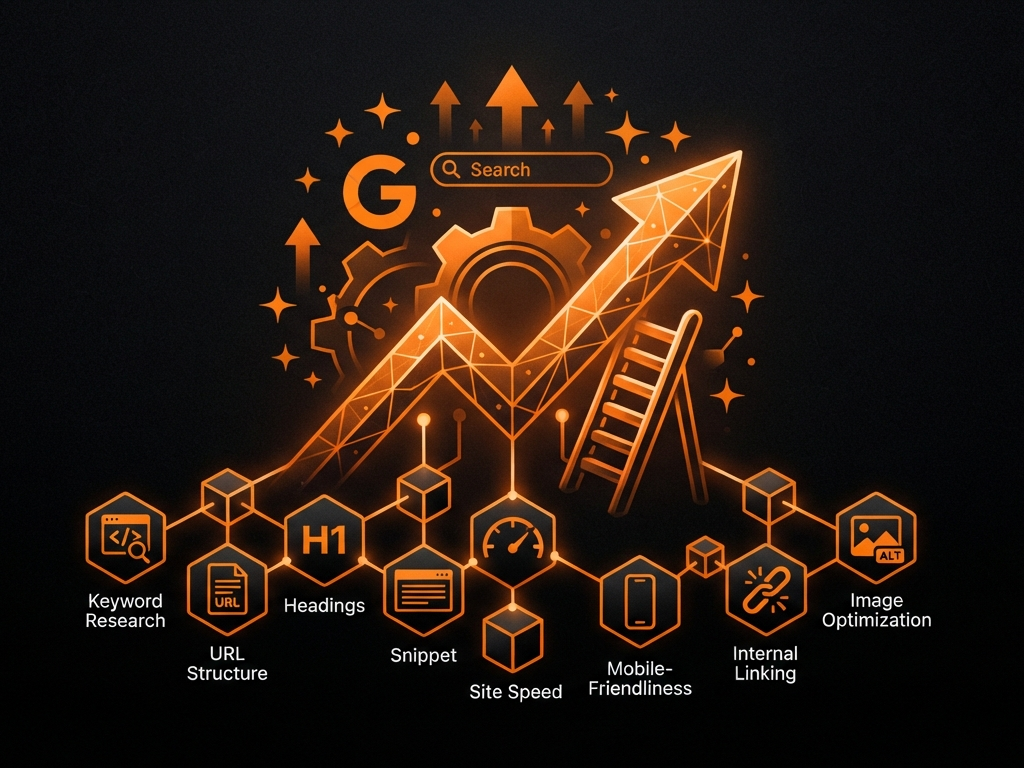
July 23, 2026 zamankhan45041@gmail.com On-Page SEO Checklist to Boost Your Google Rankings Mastering the art of on-page optimization is one of the most effective ways to elevate your visibility in search engine results. When you follow a structured on-page SEO checklist to boost your Google rankings, you ensure that every piece of content is fully optimized for both users and search engine crawlers. Whether you are launching a brand-new website or auditing an existing platform, utilizing a reliable on-page SEO checklist to boost your Google rankings is essential for driving organic traffic. In this guide, we will break down the crucial steps needed to achieve top-tier search performance. What Is On-Page SEO? On-page SEO refers to the process of optimizing individual web pages to rank higher in search engine results. It involves improving both the content and the HTML source code of a page to make it more relevant, accessible, and user-friendly. Unlike off-page SEO, which focuses on backlinks and external signals, on-page SEO gives you complete control over your website’s optimization. Complete On-Page SEO Checklist 1. Start with Proper Keyword Research Every successful SEO strategy begins with identifying the right keywords. Focus on: Primary keyword Secondary keywords Long-tail keywords User search intent Use keywords naturally throughout your content without keyword stuffing. Example Primary Keyword: On-Page SEO Checklist 2. Write an SEO-Friendly Title Tag Your title tag is one of the most important ranking factors. Best practices: Keep it under 60 characters Include your primary keyword Make it compelling for users Add your brand name if appropriate Example: On-Page SEO Checklist to Boost Your Google Rankings | Your Company 3. Optimize the Meta Description A strong meta description improves click-through rates. Tips: Keep between 150–160 characters Include your primary keyword Add a clear value proposition Encourage users to click Example: Follow this complete on-page SEO checklist to improve Google rankings, increase organic traffic, and grow your business online. 4. Create SEO-Friendly URLs Short, descriptive URLs are easier for both users and search engines. Good Example: yourwebsite.com/on-page-seo-checklist Avoid: yourwebsite.com/post?id=12345 5. Use One H1 Heading Each page should contain only one H1 heading. Your H1 should: Include the main keyword Clearly describe the page Match the user’s search intent 6. Structure Content with H2 and H3 Headings Organized content is easier to read and helps search engines understand your page. Example: H1 H2 H3 H3 H2 This structure improves readability and SEO. 7. Write High-Quality Content Google rewards helpful, original, and informative content. Your content should: Solve readers’ problems Answer common questions Be well-researched Include examples Be easy to understand Offer real value Quality content keeps visitors engaged and increases the chances of ranking higher. 8. Optimize Images Images improve user experience but should also be optimized. Checklist: Compress images Use descriptive filenames Add keyword-rich ALT text Choose modern formats like WebP Maintain responsive image sizes Optimized images help improve page speed and accessibility. 9. Improve Page Loading Speed Website speed directly affects rankings and user satisfaction. Ways to improve speed: Compress images Enable browser caching Minify CSS and JavaScript Reduce unnecessary plugins Use a Content Delivery Network (CDN) Choose reliable web hosting A faster website leads to lower bounce rates and better conversions. Why On-Page SEO Matters A properly optimized website can help you: Increase organic traffic Improve Google rankings Generate high-quality leads Enhance user experience Build brand credibility Achieve better conversion rates Stay ahead of competitors On-page SEO is an investment that continues to deliver long-term results. Common On-Page SEO Mistakes Avoid these mistakes: Keyword stuffing Duplicate content Missing meta descriptions Broken internal links Slow loading pages Large, uncompressed images Poor mobile optimization Thin or low-quality content Missing image ALT text Multiple H1 headings Final Thoughts In today’s digital landscape, optimizing your web pages is a continuous journey that requires precision, patience, and a proven strategy. When website owners actively utilize an on-page SEO checklist to boost your Google rankings, they unlock sustainable visibility, higher search engine trust, and long-term digital success. Whether you are fine-tuning meta tags, improving page speed, or structuring content, sticking to a dependable on-page SEO checklist to boost your Google rankings guarantees that your website stays ahead of the competition and achieves its true potential.
How Digital Marketing Helps Small Businesses Grow
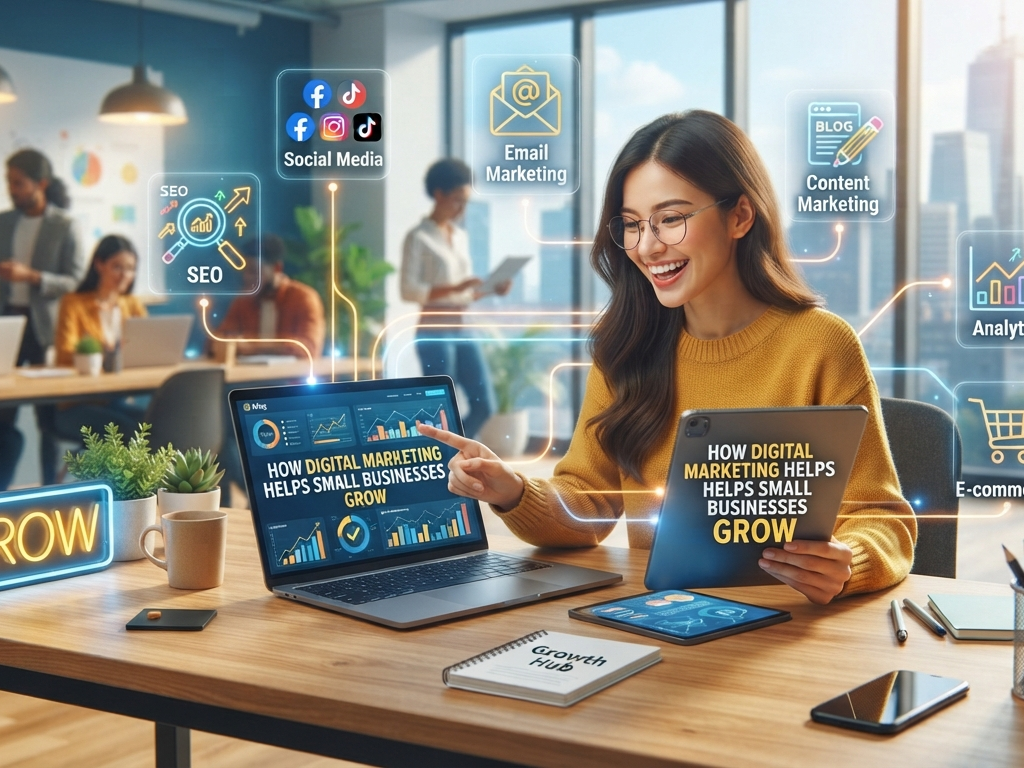
July 23, 2026 zamankhan45041@gmail.com How Digital Marketing Helps Small Businesses Grow In today’s competitive business landscape, having a great product or service is no longer enough. Customers are searching online, comparing businesses, reading reviews, and making purchasing decisions before they ever contact a company. For small businesses, understanding how digital marketing helps small businesses grow creates both a challenge and a massive opportunity. Digital marketing provides an affordable and effective way to reach the right audience, build trust, and drive sustainable growth. Whether you’re a startup, a local business, or an established company looking to expand, digital marketing can help you compete with larger brands without requiring a massive advertising budget. What Is Digital Marketing? Digital marketing is the promotion of products or services through online channels such as: Search Engine Optimization (SEO) Social Media Marketing Pay-Per-Click (PPC) Advertising Content Marketing Email Marketing Website Optimization Online Reputation Management These strategies work together to increase your online visibility, attract potential customers, and convert visitors into loyal clients. How Digital Marketing Helps Small Businesses Grow 1. Reach More Customers Unlike traditional marketing methods that are limited by location or expensive advertising costs, digital marketing allows your business to reach customers wherever they are. With the right strategy, your business can appear in search engine results, social media feeds, and online advertisements exactly when potential customers are looking for your products or services. 2. Cost-Effective Marketing One of the biggest advantages for small businesses is affordability. Digital marketing campaigns can be customized to fit almost any budget while delivering measurable results. Instead of spending heavily on newspapers, billboards, or television ads, businesses can invest in targeted campaigns that reach people who are genuinely interested in their offerings. 3. Improve Brand Awareness People buy from businesses they recognize and trust. Consistent social media activity, informative blog posts, professional website design, and valuable content help establish your business as a reliable brand. The more visible your business becomes online, the more likely customers are to remember and choose your services. 4. Target the Right Audience Location Age Interests Search behavior Purchasing habits Digital marketing allows businesses to target customers based on: Search Engine Optimization (SEO) Social Media Marketing Pay-Per-Click (PPC) Advertising Content Marketing Email Marketing Website Optimization Online Reputation Management Instead of marketing to everyone, you can focus your budget on people who are most likely to become customers, resulting in higher conversion rates and better returns on investment. 5. Generate Quality Leads A well-designed website combined with SEO, Google Ads, and engaging content attracts visitors who are actively searching for solutions. These visitors are already interested in your products or services, making them much more likely to contact your business or complete a purchase. The Role of SEO in Business Growth Search Engine Optimization (SEO) helps your website rank higher in search engine results. When customers search for products or services related to your business, appearing on the first page significantly increases your chances of receiving website traffic, which is a major reason how digital marketing helps small businesses grow. Key benefits of SEO include: Increased organic traffic Higher credibility and trust Long-term visibility Better user experience Higher return on investment over time Unlike paid advertising, SEO continues to deliver value even after your initial investment, proving once again how digital marketing helps small businesses grow and maintain a competitive edge online. Social Media Builds Customer Relationships Platforms like Facebook, Instagram, LinkedIn, and TikTok provide businesses with direct communication channels to engage with customers. Social media helps businesses: Share updates and promotions Showcase products and services Respond to customer inquiries Build a loyal community Increase brand recognition Regular interaction strengthens customer relationships and encourages repeat business. Content Marketing Establishes Authority Creating valuable content helps businesses educate their audience while demonstrating expertise. Examples include: Blog articles How-to guides Videos Infographics Case studies Helpful content answers customer questions, builds trust, and supports SEO efforts by improving your website’s visibility in search engines. Paid Advertising Delivers Fast Results While SEO focuses on long-term growth, paid advertising provides immediate visibility. Google Ads and social media advertising allow businesses to: Reach targeted audiences quickly Promote special offers Increase website traffic Generate leads Track campaign performance When managed properly, paid advertising can produce an excellent return on investment. Measure Every Marketing Effort One of digital marketing’s greatest strengths is its ability to track performance. Businesses can monitor: Website visitors Conversion rates Customer behavior Campaign performance Advertising costs Return on investment (ROI) This data allows businesses to make informed decisions and continuously improve their marketing strategies. Why Your Website Matters Your website serves as your digital storefront. A professional website should be: Mobile-friendly Fast-loading Easy to navigate Secure Optimized for search engines Designed to convert visitors into customers An attractive, user-friendly website builds trust and encourages visitors to take action. Final Thoughts In today’s competitive digital marketplace, adopting the right strategies is essential for any modern company. When business owners fully understand how digital marketing helps small businesses grow, they can unlock powerful opportunities, build lasting customer trust, and achieve sustainable long-term success. Whether you are launching a startup or looking to expand your existing operations, implementing a solid marketing plan clearly demonstrates how digital marketing helps small businesses grow and stay far ahead of the competition.
SEO: The Key to Online Success

SEO: The Key to Online Success is the ultimate principle every modern entrepreneur must embrace, because in the digital age, simply having a website is not enough. When looking at SEO: The Key to Online Success, you must realize that to attract visitors and grow your online presence, your website needs to be visible on search engines. Search Engine Optimization (SEO) is the process of improving a website’s visibility in search engine results, helping businesses reach their target audience and increase organic traffic. What Is SEO? SEO is a collection of strategies and techniques used to improve a website’s ranking on search engines such as Google. The higher a website ranks, the more likely it is to receive clicks and visitors. SEO focuses on making websites more relevant, user-friendly, and valuable to search engine users. Why Is SEO: The Key to Online Success? Understanding SEO: The Key to Online Success offers numerous benefits for businesses and website owners: Increases organic website traffic Improves online visibility and brand awareness Generates quality leads and customers Builds credibility and trust Provides long-term marketing results Delivers a better user experience Types of SEO On-Page SEO: On-page SEO involves optimizing elements within your website, including high-quality content, keyword optimization, title tags and meta descriptions, header tags (H1, H2, H3), internal linking, and image optimization. Off-Page SEO: Off-page SEO focuses on activities outside your website that improve authority and rankings, such as backlink building, social media promotion, brand mentions, and online reputation management. Technical SEO: Technical SEO ensures that search engines can effectively crawl and index your website. Key aspects include website speed optimization, mobile responsiveness, secure HTTPS connection, XML sitemaps, and structured data implementation. Essential SEO Strategies Create Valuable Content: Content is the foundation of SEO. Publish informative, engaging, and relevant content that addresses your audience’s needs and questions. Conduct Keyword Research: Identify the search terms your target audience uses and naturally incorporate them into your content. Optimize for Mobile Devices: With most internet users browsing on smartphones, a mobile-friendly website is essential for SEO success. Improve Website Speed: Fast-loading websites provide a better user experience and are favored by search engines. Build Quality Backlinks: Earning links from reputable websites increases your site’s authority and improves search rankings. Common SEO Mistakes to Avoid Keyword stuffing Duplicate content Ignoring mobile optimization Slow website performance Poor-quality backlinks Missing meta titles and descriptions Benefits of Long-Term SEO Unlike paid advertising, SEO provides sustainable growth over time. A strong SEO strategy can continue driving traffic and generating leads long after content is published. Businesses that invest in SEO often experience higher search rankings, increased website traffic, better conversion rates, stronger brand authority, and improved return on investment. The Future of SEO SEO continues to evolve with advancements in technology and user behavior. Emerging trends include voice search optimization, artificial intelligence in search, user experience-focused ranking factors, video SEO, and local SEO enhancements. Businesses that stay updated with these trends can maintain a competitive advantage in the digital marketplace. Conclusion Search Engine Optimization is an essential part of any successful digital marketing strategy. Embracing SEO: The Key to Online Success allows you to optimize your website, create valuable content, and follow SEO best practices to improve your search engine rankings, attract more visitors, and grow your business online. Investing in SEO: The Key to Online Success today can deliver long-term benefits and help your business achieve lasting success in an increasingly competitive digital world.
How a Graphic Design Company in Dubai Can Help Your Brand Stand Out

Graphic Design Company in Dubai plays an essential role because to succeed today, businesses must have a strong brand presence in a competitive market. When looking at how a graphic design company in Dubai can transform your business, you realize that a professional partner can create a strong visual identity for your brand, making it stand out from competitors. This blog will discuss how a graphic design company in Dubai can improve your brand image, recognition, and profits. Visual Identity is Powerful A brand’s visual identity is crucial as it’s the first thing potential customers notice. A good visual identity can express your brand’s values, personality, and message, which are important for leaving a lasting impression on your audience. Partnering with a proficient graphic design company in Dubai can help you establish a distinctive and memorable visual identity. For more insights on branding, you can read about Brand Identity Principles (External DoFollow Link). Logo Design The logo is the cornerstone of your brand’s visual identity. A professional graphic design company in Dubai can create a custom logo that embodies your brand’s essence. If you are also interested in web presence, check out our guide on Web Development Trends 2026 (Internal Link). Brand Collateral Design In addition to your logo, other elements include business cards, brochures, and packaging. A graphic design company in Dubai can create cohesive collateral that ensures a consistent visual experience. Boosting Brand Recognition Creating a consistent and recognizable brand identity is key to increasing brand recognition. By using a uniform design across all marketing materials, customers will be more likely to remember your brand. Consistency in Design A graphic design company in Dubai can help maintain consistency in design by creating a brand style guide. This document outlines the specific colors, fonts, and design elements that should be used across all marketing materials, ensuring a cohesive and consistent look. Social Media Graphics In today’s digital age, social media platforms are essential. A graphic design company in Dubai can create eye-catching graphics that align with your brand. For further learning, check out Social Media Marketing Strategy (External DoFollow Link). Enhancing Brand Messaging Your brand’s messaging should be clear and compelling. Graphic design plays a crucial role in conveying this messaging effectively through visual cues and layout hierarchy. Infographics and Visual Data Infographics are a powerful way to present complex information. A graphic design company in Dubai can design engaging infographics that help your audience understand your products or services better. Why Local Expertise Matters Choosing a local graphic design company in Dubai is advantageous because they understand the local market trends, cultural nuances, and consumer behavior in the UAE. This localized approach ensures your marketing materials resonate deeply with your target audience. Conclusion A professional graphic design company in Dubai can help your brand stand out in a crowded market by creating a strong visual identity, boosting brand recognition, enhancing brand messaging, and improving user experience. By investing in high-quality graphic design services from a top graphic design company in Dubai, you can ensure your brand’s success and longevity in today’s competitive business landscape. Remember, your visual strategy is an investment in your company’s future growth and market authority.
The Roadmap to Success: Business Planning

The Roadmap to Success: Business Planning is an essential strategy that every modern entrepreneur must embrace, because starting and growing a successful business requires much more than just a great idea. When implementing The Roadmap to Success: Business Planning, a well-structured business plan serves as a definitive roadmap that helps entrepreneurs define their goals, understand their market, and make informed decisions. Whether you are launching a startup or expanding an existing company, mastering The Roadmap to Success: Business Planning is crucial for long-term achievement and overall market survival. What Is The Roadmap to Success: Business Planning? A business plan is a written document that outlines a company’s objectives, strategies, target market, financial projections, and operational structure. By utilizing The Roadmap to Success: Business Planning, you provide a clear direction for the business and help stakeholders understand the company’s vision and goals. Furthermore, integrating insights from our previous guide on Digital Business Growth Strategies (Internal Link) will help you align your planning with modern market trends. Why Is a Business Plan Important? A business plan helps business owners: Define clear goals and objectives Identify opportunities and potential challenges Understand target customers and competitors Secure funding from investors or lenders Track business growth and performance Make strategic decisions with confidence Key Components of a Business Plan Executive Summary: This section provides an overview of the business, including its mission, vision, products or services, and key objectives. Company Description: Explain what your business does, the problems it solves, and what makes it unique in the market. Market Analysis: Research your industry, target audience, competitors, and market trends. Understanding the market helps create effective business strategies. Products and Services: Describe the products or services you offer and explain how they meet customer needs and provide value. Marketing and Sales Strategy: Outline how you plan to attract customers, promote your brand, and generate revenue. For advanced industry insights, check out Neil Patel’s Marketing Blog (External DoFollow Link). Operations Plan: Explain how your business will operate daily, including production processes, staffing, technology, and logistics. Financial Plan: Provide financial forecasts, including projected revenue, expenses, profit margins, and funding requirements. A solid financial plan demonstrates business viability. Benefits of Effective Business Planning A strong business plan offers several distinct advantages: Improves decision-making across all departments Reduces operational business risks effectively Increases overall productivity and efficiency Attracts potential investors and strategic partners Supports sustainable, long-term corporate growth Helps measure daily progress against set goals How The Roadmap to Success: Business Planning Drives Growth Organizations that focus on The Roadmap to Success: Business Planning experience smoother scaling and stronger market positioning. Reviewing your strategy frequently allows you to adapt to market shifts, manage risks, and optimize your internal resources. Common Business Planning Mistakes to Avoid To maximize your chances of success, avoid these common mistakes: Setting unrealistic goals and milestones Ignoring vital market research data Underestimating initial and ongoing costs Failing to update the plan regularly Lacking a clear digital marketing strategy Tips for Creating a Successful Business Plan Keep your goals specific, realistic, and measurable Conduct thorough, data-driven market research Focus heavily on target customer needs Create realistic and conservative financial projections Review and update your business plan regularly Use clear, concise, and professional language Conclusion The Roadmap to Success: Business Planning is more than just a static document—it is a dynamic strategic guide that helps businesses stay focused and achieve their goals. By carefully planning your operations, marketing efforts, and financial strategies, you can build a strong foundation for success and navigate challenges with confidence. Whether you are starting a new venture or growing an existing business, investing time in The Roadmap to Success: Business Planning remains one of the most valuable steps you can take toward long-term growth and profitability.